
 EN
EN
The Role of Finishing in Professional Pharma Label Performance
A Pharma Label is more than a printed identifier; it is a critical component of pharmaceutical secondary packaging that directly influences compliance, brand safety, and patient trust. Modern finishing technologies allow a Pharma Label to achieve much higher levels of legibility, durability, and regulatory performance compared with basic printed materials. From surface protection to tamper-evident structures, each finishing element contributes to how effectively a Pharma Label protects medication information throughout transportation, storage, and daily usage. Because pharmaceutical environments involve moisture, friction, chemicals, refrigeration, and long-term shelf storage, finishing techniques become essential rather than optional design details. A well-finished Pharma Label ensures the printed content resists abrasion, adhesives remain stable, colors remain consistent, and dosage instructions stay readable across the product life cycle. For manufacturers, a professionally engineered Pharma Label also reduces production waste, improves SKU consistency, and supports automated application lines in high-speed facilities.The article explores how advanced materials,precision engineering,and rigorous processes converge to create Pharma Labels that protect patients,satisfy regulators,and uphold brand integrity.
Types of Pharma Label Structures
Pharma labels are engineered in formats optimized for different production and application scenarios.
Roll Format
A roll-format Pharma Label is designed for automated high-speed application lines in pharmaceutical manufacturing and packaging facilities. It is engineered to maintain tight tolerances in width, repeat spacing, and adhesive uniformity to ensure smooth operation on labeling machines. The structure supports various materials, including PP, PE, PET, and coated paper. Its flexibility in print direction and rewind configuration allows compatibility with multiple equipment setups. The roll form also enables large-volume production, consistent print quality, and reduced downtime for changeovers, which is essential for multi-SKU pharmaceutical workflows.
Sheet Format
Sheet-format Pharma Label structures are ideal for short production runs, pilot batches, and highly customized packaging needs. They allow precision color testing, micro-quantity printing, and multiple finishing combinations suitable for R&D environments or small-batch clinical packaging. A sheet-format Pharma Label can accommodate unique die-cut shapes, multi-layer constructions, and booklet integration. The format offers enhanced registration accuracy and enables detailed inspection during quality control, making it a preferred choice when product variation and accuracy are critical.
Multi-Layer Construction
Multi-layer Pharma Label formats include booklet labels and extended-content constructions that provide additional space for instructions, multilingual content, dosage charts, and regulatory information. These labels are engineered with hinges, resealable adhesives, and layered paper or film sheets that maintain readability while maximizing usable space. The multi-layer structure ensures compliance with strict regional requirements without increasing carton size. This type of Pharma Label is especially valuable for complex medications, combination treatments, or product lines distributed across multiple countries.
Core Materials for Effective Pharma Label Production
The substrate is the first line of defense.We select materials based on the specific drug's storage and handing environment.
Synthetic Film (PP,PE,PET)
Pharma Label materials such as PP, PE, and PET films provide superior moisture resistance, chemical resistance, and durability. These films offer excellent print clarity and are suitable for cold-chain or refrigerated pharmaceutical environments. Their dimensional stability ensures consistent performance on applicators, while the smooth surface supports finishing processes such as lamination, spot coating, and foil application. Film-based Pharma Label materials are commonly used for vials, syringes, test kits, and high-moisture storage environments.
Paper-Based Substrates
Paper substrates remain widely used in Pharma Label production due to their cost efficiency, print clarity, and versatility. Coated papers support offset and digital printing with excellent color reproduction. Paper-based Pharma Label materials can be enhanced with varnish, lamination, or hybrid coatings to improve abrasion resistance and chemical stability. They are suitable for folding cartons, bottles, blister packs, and secondary packaging that does not require exposure to condensation or extreme temperature fluctuations.
High-Clarity PET
High-clarity PET material is selected when a premium appearance is required, especially for transparent or no-label looks. It provides rigidity, scratch resistance, and optical transparency while supporting high-end finishing processes. A Pharma Label made from high-clarity PET offers excellent print precision and is commonly used for premium medical devices, nutraceutical packaging, and laboratory products where visual quality is important.
Finishing Techniques for Pharma Label Enhancement
Finishing is where resilience and intelligence are built into the label.
Protective Coatings
Varnishes and laminations serve as essential protective finishes for a Pharma Label. These coatings defend the printed surface from abrasion, alcohol wipes, chemical exposure, and handling friction throughout distribution. Gloss varnish enhances vibrancy, while matte varnish reduces glare and improves legibility under strong lighting conditions. Lamination adds a thicker barrier layer for enhanced durability, making it suitable for refrigerated storage or products requiring frequent handling. The protective coating ensures that dosage information and batch codes remain intact across the medication’s entire life cycle.
Decorative and Functional Elements
Cold foil, spot UV, and textured coatings elevate both the appearance and performance of a Pharma Label. Cold foil adds metallic accents for premium branding while maintaining compatibility with high-speed application lines. Spot UV creates contrast zones that emphasize critical text or design elements, improving user readability. Textured finishes offer tactile differentiation for visually impaired users or for distinguishing product variants by touch. These finishing techniques strengthen the Pharma Label’s visual and functional impact without compromising regulatory compliance.
Precision Die-Cutting
A Pharma Label requires precise die-cutting to ensure correct application and alignment on various container shapes. High-accuracy dies allow for tight corner radiuses, perforations, and pull-tab structures essential for tamper-evident requirements. Precision-cut shapes also support multi-layer labels, resealable structures, and wrap-around formats. With the correct die-cut configuration, a Pharma Label maintains compatibility with multi-line production environments and reduces application errors.
Printing Technologies in Pharma Label Production
Each printing technology serves a strategic purpose in pharma labeling.
Offset Printing
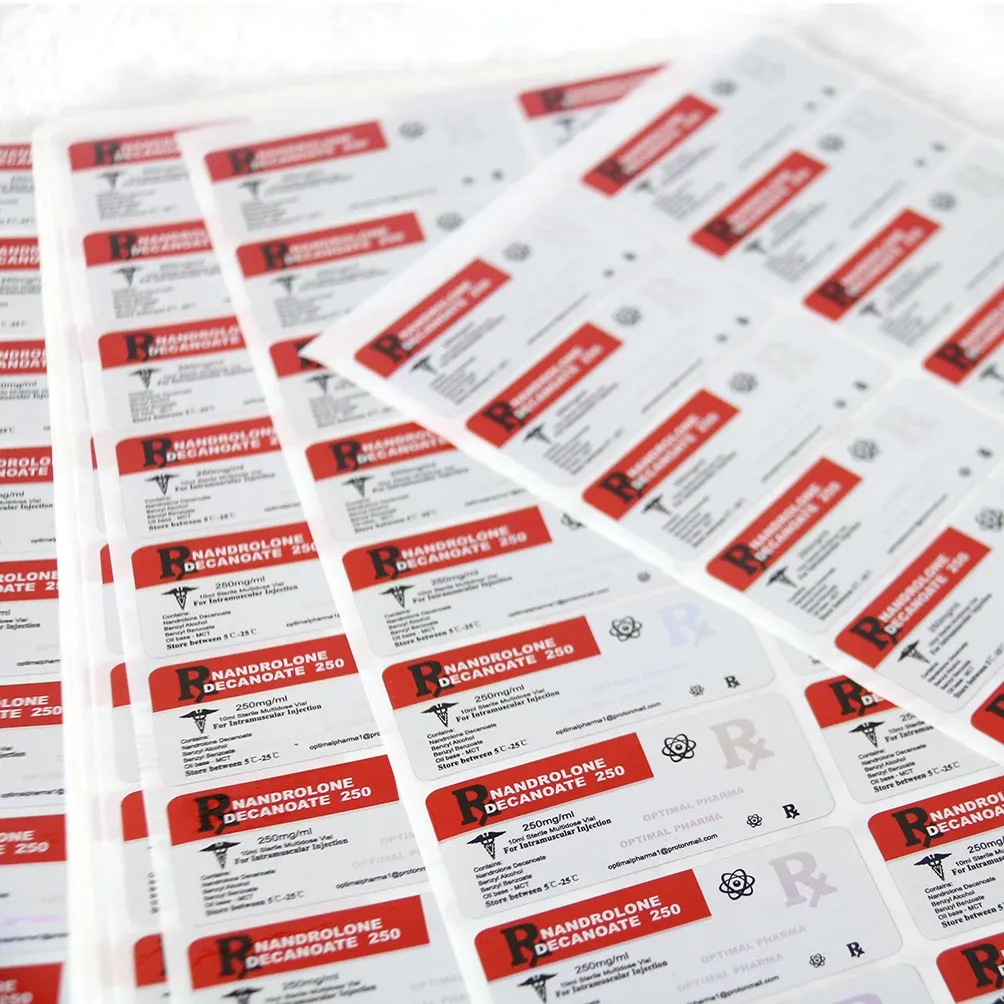
Offset printing remains a gold standard for large-volume Pharma Label production due to its sharp image quality, color stability, and cost efficiency. It is ideal for cartons and sheet labels requiring consistent Pantone matching and detailed graphics. Offset systems support advanced finishing layers without compromising the visual clarity required for pharmaceutical instructions and regulatory text.
Digital Printing
Digital printing is widely used for short runs, variable data, and clinical trial batches that require rapid turnaround. Digital systems allow pharmaceutical brands to print multiple SKUs, language versions, or dosage variations without plate changes. A digitally printed Pharma Label maintains excellent resolution and supports finishing processes such as varnish and lamination. This flexibility suits pilot medicines, sample lots, and personalized treatment packaging.
Flexographic Printing
Flexo printing is the preferred method for high-speed roll-format production. It offers excellent durability, efficient ink transfer on films, and compatibility with inline finishing such as cold foil, die-cutting, and lamination. Flexo presses can run long volumes with minimal waste while maintaining consistent clarity. A flexo-printed Pharma Label is ideal for vials, tubes, syringes, bottles, and cylindrical packaging.
Regulatory Considerations for Pharma Label Design
A professionally finished label is designed from the start to meet global standards.
Regulatory Standards
A Pharma Label must adhere to GMP standards, FDA labeling rules, EU FMD requirements, and regional packaging regulations. These standards govern font size, contrast, legibility, placement of dosage instructions, and stability of printed information. Compliance ensures that users can identify medicines accurately and safely, reducing dosage errors and storage risks.
Structural Safety
Tamper-evident elements on a Pharma Label include perforations, tear lines, breakable seals, and locking tabs that prevent unauthorized access. These structures help protect medication integrity throughout the supply chain. Tamper-evident features are increasingly incorporated as part of the finishing stage, ensuring seamless integration into high-volume packaging workflows.
Legibility Requirements
Pharma Label readability must remain consistent across various lighting and handling environments. Finishing techniques such as matte varnish, high-contrast inks, and precise color management using G7 or Pantone standards ensure predictable and compliant output. These elements strengthen the accuracy of critical medical information during use.
Production Strengths Supporting Pharma Label Manufacturing
A variety of production advantages can better serve customers.
High-Capacity Manufacturing
A professional production facility equipped with automated die-cutting lines, roll-label printing systems, and ISO-certified workshops can deliver pharmaceutical-grade output at scale. These facilities ensure accuracy across multi-SKU label programs, reducing errors and improving operational efficiency.
Fast Delivery for Multi-SKU Projects
Pharma Label orders often involve short lead times and numerous variants across strengths, languages, and packaging formats. Advanced scheduling systems and fast digital printing lines support quick turnarounds while maintaining consistent quality.
Quality Stability
Consistent color, adhesive strength, and dimensional accuracy are essential in Pharma Label production. Professional facilities maintain strict control across inspection points, including incoming material checks, glue adhesion tests, cutting precision, and final appearance confirmation.
Quality Control in Pharma Label Production
Consistency and reliability are non-negotiable.
Color and Print Stability
Every Pharma Label undergoes color verification to ensure batch-to-batch consistency. Measurement devices check shade accuracy, while inspectors confirm clarity of fine text and barcodes. This guarantees that each label remains compliant and legible across production cycles.
Structural and Adhesive Tests
Specialized testing evaluates adhesion performance under different environmental conditions such as refrigeration, humidity, and mechanical stress. A Pharma Label must maintain secure bonding to ensure patient safety and accurate dosing instructions.
Final Strength Validation
Finished Pharma Label products are tested for tear resistance, abrasion resistance, and compatibility with automated application lines. These procedures ensure long-term stability throughout transportation and storage.
Pharma Packaging Supply Chain Support
The stability of the supply chain determines the quality of the products.
Packing and Storage
Labels are packed using protective film, sealed cartons, and palletized structures to prevent moisture absorption or accidental damage. Temperature-stable storage recommendations ensure long-term performance for both film and paper materials.
Logistics and Delivery
A comprehensive supply chain ensures that Pharma Label products reach global markets with consistent quality. With strong logistics coordination, products maintain compliance regardless of destination storage conditions.
Flexible Order Management
Pharma Label production often involves small batches, variable SKUs, or just-in-time manufacturing schedules. Flexible MOQ options and coordinated delivery programs help pharmaceutical companies maintain operational efficiency.
Conclusion
A professionally finished Pharma Label strengthens product identification, improves patient safety, and supports long-term regulatory compliance. Through advanced printing, protective coatings, accurate die-cutting, and rigorous quality control, pharmaceutical brands ensure that every Pharma Label performs reliably in real-world conditions. Aprofessionally finished Pharma Label is a sophisticated product of material science,precision engineering,and regulatory intelligence.It is a critical investment that goes beyond aesthetics to actively safeguard patient safety,encure supply chain integrity,and protect brand reputation.by partnering with a manufacture that masters the entire spectrum-from advanced finishing and compliant design to scalable,quality-controlled production-pharmaceutical companies secure a foundational element of their product's success and trustworthiness.
Table of Contents
- The Role of Finishing in Professional Pharma Label Performance
- Types of Pharma Label Structures
- Core Materials for Effective Pharma Label Production
- Finishing Techniques for Pharma Label Enhancement
- Printing Technologies in Pharma Label Production
- Regulatory Considerations for Pharma Label Design
- Production Strengths Supporting Pharma Label Manufacturing
- Quality Control in Pharma Label Production
- Pharma Packaging Supply Chain Support
- Conclusion