
 EN
EN
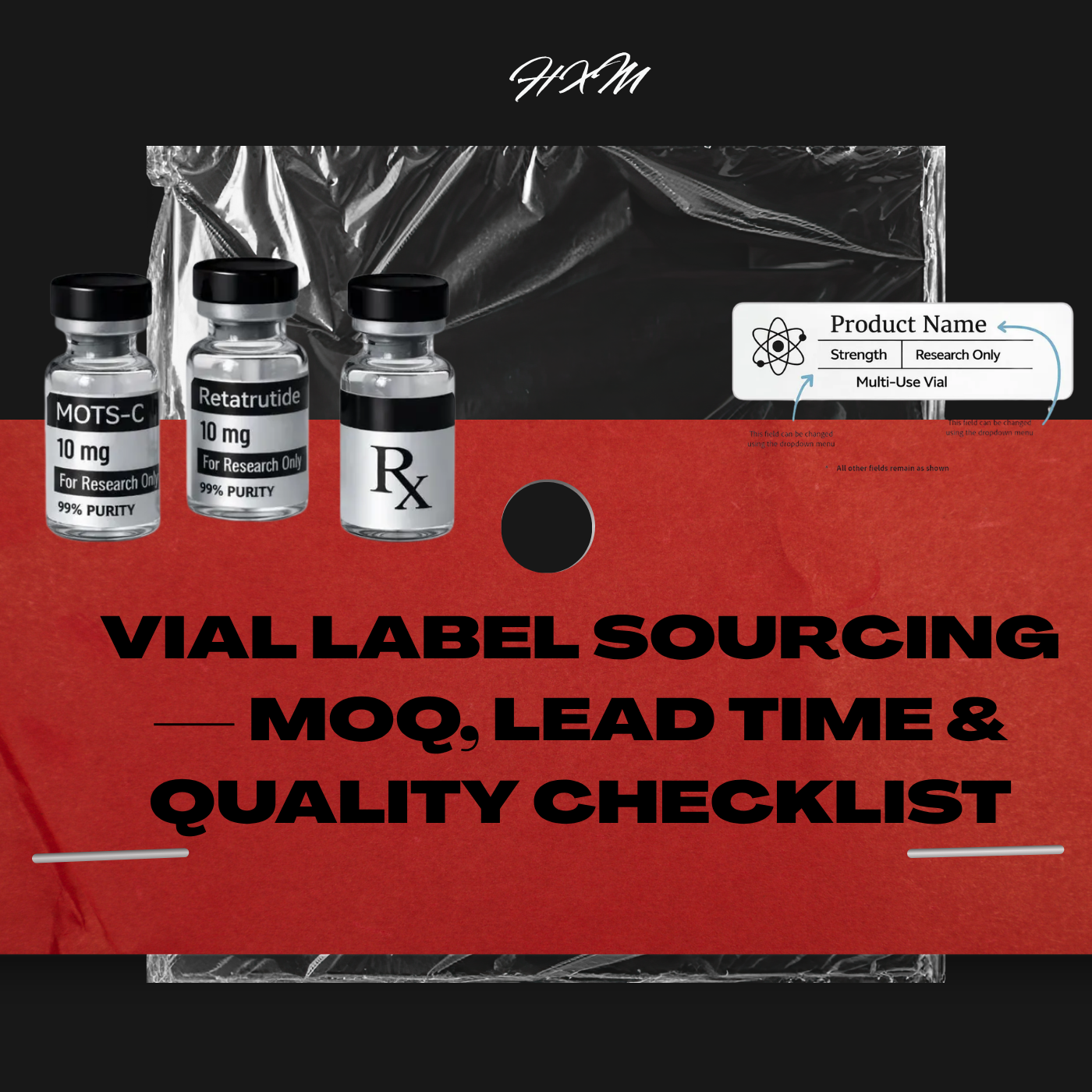
In the specialized world of pharmaceutical and research chemical distribution, the Vial Label is much more than a simple sticker. It is a precision-engineered component that must withstand extreme environments, ranging from cryogenic storage at -80°C to repeated exposure to chemical solvents like 70% Isopropyl Alcohol.
Sourcing the right Vial Label requires a deep understanding of material science, printing technology, and supply chain logistics. This guide provides a comprehensive framework for navigating Minimum Order Quantities (MOQs), managing lead times, and implementing a rigorous quality checklist to ensure your product remains compliant and professional.
1. Understanding MOQ: Digital vs. Flexographic Printing
When sourcing a Vial Label, the first hurdle is often the Minimum Order Quantity (MOQ). The printing technology chosen by your supplier directly dictates these thresholds and your overall unit cost.
Digital printing is the preferred choice for startups or brands with multiple SKUs (e.g., sourcing small batches for 20 different peptide types). Because digital presses require no physical plates, MOQs are typically low, often starting at 500 to 2,000 units. This allows for high flexibility and lower upfront investment.
Conversely, Flexographic printing is designed for high-volume commercial runs of 10,000 to 100,000+ units. While it requires a significant initial cost for printing plates, the per-label price drops drastically at scale. For established brands with stable formulations, transitioning to Flexographic printing is the most cost-effective long-term strategy.
2. Managing Lead Times and Logistics Pipelines
Lead times in 2026 are influenced by material availability and the complexity of the finishing processes. A standard Vial Label project involves several phases that must be accounted for in your production calendar.
Typically, the pre-production phase—including digital proofing and color matching—takes 2 to 4 business days. Once the proof is approved, digital production runs usually finish within 5 to 7 days. If your project requires "Extended Content Labels" (booklet labels) or specialized anti-counterfeiting foils, you should expect an additional 5 business days for these technical processes.
| Sourcing Phase | Estimated Duration | Key Dependency |
| Artwork & Proofing | 2–4 Business Days | Design accuracy and vector outlining. |
| Digital Production | 5–7 Business Days | Machine queue and material stock. |
| Flexo Production | 10–15 Business Days | Plate fabrication and press setup. |
| Domestic Shipping | 2–5 Business Days | Courier speed and location. |
3. The Essential Quality Checklist for Vial Labels
To avoid costly batch rejections or safety issues, every shipment of labels must be vetted against a strict technical checklist. The small diameter of 2ml to 10ml vials leaves zero margin for error.
Mandrel Hold Verification: Ensure the material does not "wing" or peel at the edges when applied to small-diameter vials.
Adhesive Temperature Rating: Confirm the label remains adhered at your specific storage temperature (e.g., 4°C , -20°C or -80°C ).
Solvent Resistance: Perform a rub-test using 70% IPA to ensure the ink does not smudge or dissolve.
Barcode Scannability: Verify that 100% of QR codes or DataMatrix codes are crisp and scannable by standard optical readers.
Unwind Direction: Check that the roll orientation matches your automatic labeling machinery's requirements to prevent application errors.
4. Anti-Counterfeiting and Serialization Integration
As the value of biologics and research peptides increases, so does the risk of diversion and counterfeiting. High-quality labels should incorporate security features that are difficult to replicate.
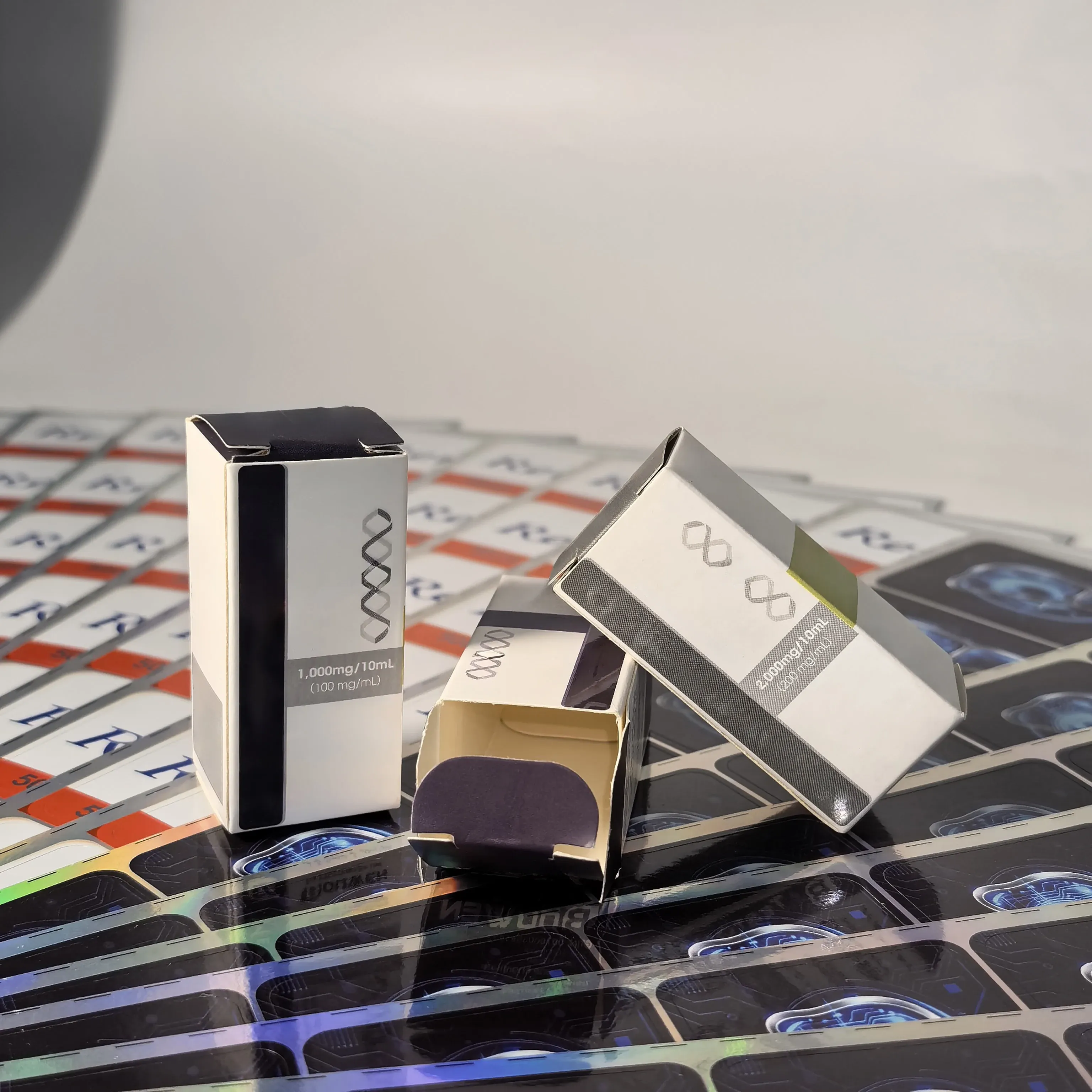
Request that your supplier integrate variable data printing (VDP) for unique serialization. This allows each individual vial to be tracked through the supply chain via a unique QR code. Additionally, consider "tamper-evident" materials that shred or leave a "void" pattern if the label is removed, providing an immediate visual indicator of product integrity to the end-user.
FAQ: Vial Label Sourcing
Q: Can I use standard paper for my vial labels?
A: No. Standard paper absorbs moisture and will fail in refrigerated or frozen environments. You must use synthetic films like BOPP or Polyester for professional vial applications.
Q: What is "Flagging" and how do I prevent it?
A: Flagging is when the ends of the label pop up from the curved surface of the vial. It is prevented by using a thin, flexible material with high "mandrel hold" and a high-tack acrylic adhesive.
Q: How do I know if I need a laminate or a varnish?
A: Laminates provide a physical film layer for maximum protection against scratches and chemicals. Varnishes are thinner and more cost-effective but offer less protection. For vials handled frequently or wiped with alcohol, a laminate is highly recommended.
Q: What file format should I send to the printer?
A: Always provide vector files (AI or PDF). Ensure all fonts are outlined and images are at least 300 DPI to maintain clarity on tiny 4pt font sizes.
Conclusion: Protecting Your Product and Brand
The technical success of your distribution hinges on the reliability of your Vial Label. By balancing MOQ requirements with a deep understanding of lead times and maintaining a rigorous quality checklist, you ensure that your packaging is as high-quality as the contents inside. In 2026, precision in labeling is not just an aesthetic choice—it is a fundamental requirement for safety and supply chain integrity.