
 EN
EN
Foundations of Quality Control in Modern Pharma Packaging
Pharma Packaging quality control is built on precision, traceability, and adherence to strict industry expectations. Because packaging protects medical products and supports accurate dosage, storage stability, and regulatory compliance, QC standards must be enforced throughout the entire workflow. Many companies focus on machinery or materials, but QC in Pharma Packaging is fundamentally driven by process discipline, documentation, and controlled communication. When every step is executed with accuracy, Pharma Packaging becomes a reliable component of the pharmaceutical supply chain, reducing variability and safeguarding product integrity. Whether dealing with cartons, labels, inserts, blister packs, or serialized components, quality control ensures that packaging performs consistently under real-world handling and distribution conditions. As demand for secure, compliant, and sustainable packaging grows, QC becomes even more critical in protecting brand credibility and ensuring patient safety.
Material Verification and Incoming Quality Control
Evaluation of Paper, Board, and Substrate Integrity
Material verification forms the first layer of QC for Pharma Packaging because all subsequent processes depend on the performance of the substrate. Detailed checks ensure that GSM weight, stiffness, fiber orientation, moisture content, and coating thickness match specifications. Any deviation can influence print precision, die-cut accuracy, and the structural stability of the final packaging. Incoming QC teams test resistance to cracking, ink absorption characteristics, and fold endurance to confirm material suitability. This reduces the risk of production interruptions caused by material inconsistency.
Inspection of Specialty Components and Functional Materials
Pharma Packaging often includes unique substrates such as tamper-evident seals, holographic foils, cold-chain compatible materials, and laminated safety features. Each component must undergo controlled inspection before being released to the production line. These inspections verify adhesion strength, temperature tolerance, and surface compatibility with printing inks or varnishes. Specialty materials that fail incoming checks can compromise product security or create structural failure during gluing or folding. Consistent monitoring ensures that all functional materials behave predictably during high-speed production runs.
Ensuring Compatibility With Regulatory and Safety Requirements
Material verification also includes confirming compliance with pharmaceutical safety standards, including material purity, migration limits, and suitability for direct or indirect contact with sensitive products. Regulatory compatibility ensures that no harmful substances are introduced into the product environment. By validating materials early, Pharma Packaging avoids costly rejections later in the workflow and maintains alignment with global pharmaceutical guidelines.
Print Quality Control and Color Management
Establishing Color Accuracy and Consistency
Color accuracy is a critical aspect of Pharma Packaging because packaging must remain instantly recognizable across regions and dosage variants. QC teams verify ink density, Pantone matching, CMYK stability, and tolerance alignment across multiple print batches. Variations may cause confusion in storage, distribution, or clinical environments. Continuous color monitoring ensures that brand identity remains intact and that compliance-critical elements such as warning blocks, hazard indicators, and serialized identifiers maintain high clarity and contrast.
Print Registration and Visual Inspection Standards
Registration precision defines the quality of Pharma Packaging because misalignment affects readability and structural accuracy. QC standards require tight tolerances for text alignment, barcode placement, cutting guides, and regulatory markings. Visual inspections identify issues such as ghosting, smearing, over-inking, or print pinholes. Because medical packaging requires high levels of legibility, especially for small-font leaflets and labels, print QC ensures the clarity needed for accurate patient use and regulatory approval.
Barcode, Datamatrix, and Serialization Verification
Modern Pharma Packaging includes unique identification systems such as GS1 barcodes, datamatrix codes, and serialized labels. QC teams verify code contrast, scanability, module size, and data accuracy. Even minor print variations can affect scanning performance in hospital, pharmacy, or distribution environments. Serialization accuracy is critical for anti-counterfeit programs and regulatory tracking. By implementing multiple scanning checkpoints, QC ensures that traceability systems function correctly and remain compliant.
Structural Precision and Die-Cut Quality
Assessment of Structural Stability and Folding Performance
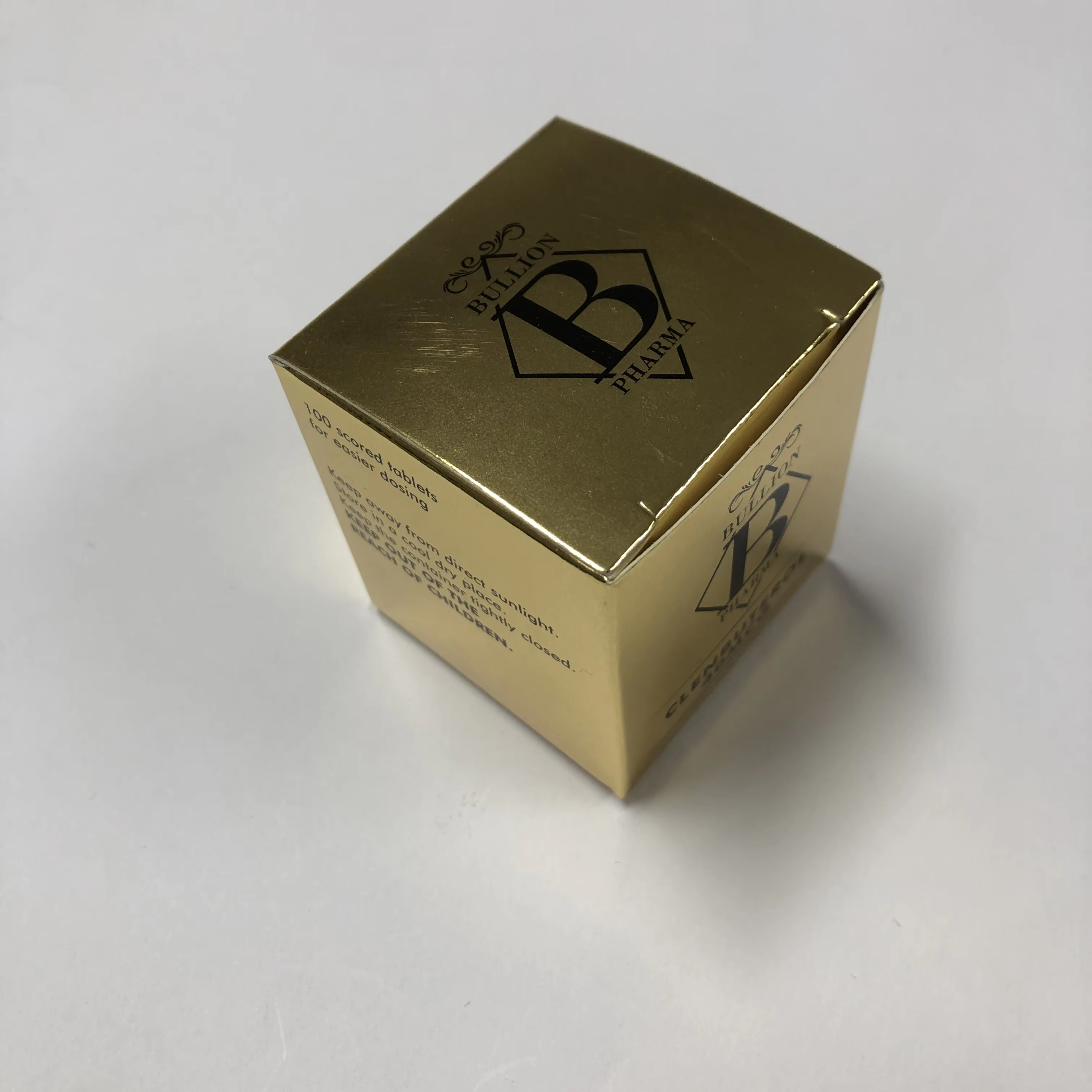
Structural QC ensures that Pharma Packaging maintains functional integrity during transportation, storage, and usage. Each carton or leaflet must fold cleanly and consistently without cracking or misalignment. QC teams measure panel dimensions, crease depth, and locking mechanisms to confirm structural accuracy. Improper folding can affect filling line efficiency and lead to mechanical jams in automated packaging systems. Precision in these areas ensures a smooth downstream process.
Accuracy of Die-Cutting and Tooling Performance
Die-cut accuracy is essential for maintaining functional consistency in Pharma Packaging. Tooling performance is measured by edge sharpness, cut uniformity, and tolerance control. QC evaluates how die-cut edges interact with folding lines and adhesive surfaces. Poor die-cut precision can result in tearing, inconsistent shapes, or panels that do not fit automated machinery. By maintaining strict tooling standards, QC ensures repeatability throughout large production runs.
Verification of Adhesion, Gluing, and Mechanical Strength
Adhesive behavior affects the long-term performance of Pharma Packaging. QC teams test glue penetration, bonding strength, curing consistency, and resistance to stress. Packaging that fails adhesion tests may open prematurely, compromising the product’s protection. Controlled gluing standards ensure each carton possesses reliable mechanical strength capable of withstanding transport handling and automated filling pressure.
Text Accuracy and Regulatory Content Compliance
Verification of Critical Medical Information and Dosage Text
Pharma Packaging carries essential health information that must be accurate at all times. QC teams perform text verification to ensure that dosage, warnings, instructions, and compliance statements match approved master documents. Any discrepancy can lead to regulatory penalties, product recalls, or patient harm. Multi-level proofreading and automated comparison systems are used to secure absolute accuracy.
Alignment of Multilingual Content and Layout Stability
Many Pharma Packaging items include multilingual text, requiring careful alignment across multiple language blocks. QC ensures that font size, line spacing, and layout structure follow approved design. Multilingual packaging must maintain equal visual weight without causing confusion or misinterpretation. Misalignment or reflow issues are escalated immediately for correction before mass production begins.
Ensuring Compliance With Regional Regulatory Standards
Pharma Packaging must reflect the regulatory environment of every market in which the product is sold. QC teams cross-check artwork against updated standards for labeling, legal disclaimers, safety warnings, and serialization rules. Ensuring aligned content helps avoid delays in release and maintains compliance across all distribution regions.
Environmental and Functional Durability Testing
Resistance to Moisture, Heat, and Light Exposure
QC standards require Pharma Packaging to withstand environmental stresses encountered during transport and storage. Testing measures how packaging reacts to moisture, temperature fluctuations, and light exposure. Material expansion, color fading, or structural distortion are monitored. Packaging must remain functional and legible under these conditions to protect product quality.
Physical Strength, Compression, and Handling Simulation
QC teams simulate handling, compression, and stacking scenarios that packaging will experience in warehouses and distribution centers. The objective is to ensure that cartons maintain protective strength and do not collapse or deform. Testing includes edge crush resistance, burst strength, and internal pressure tolerance. High performance in these tests confirms long-term durability.
Long-Term Shelf Stability and Integrity Assurance
Shelf stability affects how Pharma Packaging performs over months or years in retail or clinical environments. QC evaluates material aging characteristics, varnish durability, and adhesion reliability. These checks ensure that packaging maintains function and appearance throughout its lifecycle, supporting brand consistency and compliance requirements.
Inline and Final Inspection Procedures
Real-Time Monitoring During Production
Inline QC allows inspectors to monitor Pharma Packaging conditions while production is underway. Automated cameras, sensors, and sampling procedures detect print variations, color drift, and cutting alignment issues. This proactive approach prevents defects from progressing through later stages. Continuous monitoring contributes to consistent output quality.
Comprehensive Final Inspection of Finished Goods
After production, QC teams perform a complete inspection of packaging against approved samples and specifications. Finished goods are checked for structural accuracy, print clarity, code scanability, and visual consistency. Only products that fully align with technical and regulatory requirements proceed to packing and shipment.
Documentation, Traceability, and Release Control
Documentation is a vital part of the QC process. Inspectors maintain detailed records of material batches, machine settings, inspection results, and corrective actions. This ensures full traceability, which is essential for pharmaceutical compliance and audit readiness. Release control guarantees that only verified packaging enters the supply chain.
Supplier Collaboration and Process Integration
Alignment of Technical Specifications and Expectations
Successful Pharma Packaging QC is built on clear communication between suppliers and brand owners. Technical specifications must be fully defined and mutually understood. When structural designs, color targets, and regulatory content are aligned early, QC becomes more predictable and efficient.
Joint Review of Artwork, Materials, and Structure
Suppliers and clients benefit from reviewing artwork, materials, and structural components together before production. This collaborative approach allows both sides to confirm feasibility, identify risks, and prevent misinterpretation. Early alignment helps minimize QC deviations and reduces rework during production.
Continuous Improvement and Process Optimization
Strong supplier relationships support continuous improvement programs that enhance QC standards over time. By sharing performance metrics, inspection data, and audit results, both parties refine processes and improve consistency. This collective approach enhances the long-term quality of Pharma Packaging.
Table of Contents
- Foundations of Quality Control in Modern Pharma Packaging
- Material Verification and Incoming Quality Control
- Print Quality Control and Color Management
- Structural Precision and Die-Cut Quality
- Text Accuracy and Regulatory Content Compliance
- Environmental and Functional Durability Testing
- Inline and Final Inspection Procedures
- Supplier Collaboration and Process Integration